Author Archives: Silvia Cademartori

Name that vegetable

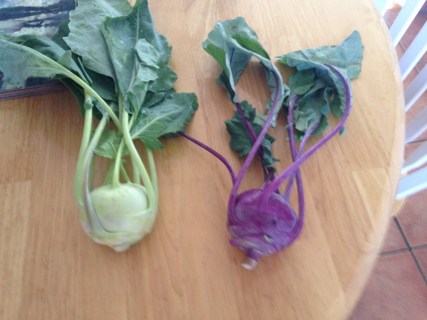
We had fun trying to identify a vegetable and a herb included in our farmer’s produce basket delivered recently. We turned to Facebook and our friends came through for us. Can you name the vegetables on the table and the herb in my hand?

Don’t peek, the answer is below the photos.

img_0376


IMG_0377

Kohlrabi and garlic scape.

That’s part of the fun of picking up a farmer’s vegetable basket every other week. We never know what to expect. I found myself sautéing chopped turnips last week and my son told me he liked the new way I made the potatoes. Oh honey, they’re not potatoes. Should I tell him?

So how much does it cost to buy organic produce in grocery stores anyway?

My second delivered organic-produce basket looked so good it should have been in a food magazine photo spread. It tasted just as good as it looked too.

img_0361All this rapture over fresh, colourful greens got me thinking; how much would it cost to buy this amount of organic vegetables at my local grocery store? It turns out, plenty. Not only in terms of cash but in time.

I had to drive to four local grocery stores (IGA, Metro, Provigo le marché and Tau) in order to find and price all the fresh, organic produce in my farmer’s basket this week. Many organic vegetables were grown in Quebec but an equal number of them were imported, despite being seasonally available in Quebec.

My farmer’s basket included: arugula, carrots, green onions, spring garlic, radish, turnips, mesclun lettuce mix (washed), basil, kale and asparagus. The quantity was enough to keep my family of three eating veggies for a week. The retail value of the basket was a surprising $33.

The highs and lows were: $4.99 for organic arugula at IGA, same for a mesclun salad mix and $1.79 for turnips at Metro and .99 cents for a bunch of radishes at Tau.

If I bought organic produce at grocery stores each week, assuming I spent the same each week, the cost over the same 11-week organic basket-delivery period would be $363 not including gas to drive around town. It’s slightly less expensive than what we paid for the Ferme Tourne Sol delivery service ($392) but doesn’t include the 5 fruit baskets included in the farm price.

In the end, I may not save money but it’s quicker, more environmentally friendly and my family helps a small local business.


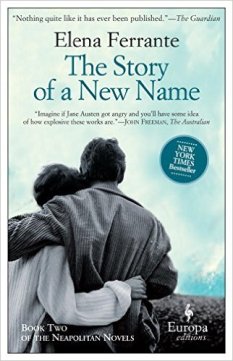
The Story of a New Name by Elena Ferrante

Europa Editions, four hundred and seventy one pages (translated by Ann Goldstein).

51w00tgvxtl-_sx320_bo1204203200_The Story of a New Name is so addictive; you can’t put it down. This is the second installment in Elena Ferrante’s Neapolitan chronicles. It’s so much better than the first, My Brilliant Friend. The novel starts where the first one ends – at Lina’s wedding, when she discovers her new husband has already betrayed her.

The soap opera list of characters already established, Ferrante is able to dive into the action in a way the first novel lacks. There’s much less set-up and character back-stories. Ferrante gets right to it and so much actually happens to her beloved duo of Lina and Elena. Lina’s honeymoon is a horror and her newly-wed life never really amounts to more than that. Elena finds success and a somewhat dubious mate.

A good chunk of the novel takes place at the beach where Lina and Elena spend the summer in the hopes of Lina becoming pregnant during one of Stefano’s visits. Plenty of actual sex and thinking about sex takes place at the beach. Lina takes a lover and in a fit of jealousy, Elena decides she’s done with being a virgin and does something drastic and terrible. Elena seems to be suffocating in Lina’s shadow. She believes Lina is sophisticated and intelligent but the ignorance and naiveté of both girls is at times frightening.

Since Elena is narrating the story, and she is infatuated, if not actually in love with Lina, much of the grandiose story-telling is centered around Lina while Elena’s tale is more sombre. This is clearly how Elena sees her own life. She says she’s happy but Elena is unable to tear herself away from Lina, even when Lina appears to implode. Lina is the proverbial traffic accident and Elena is the rubber-necker who can’t move along and eventually gets involved in the accident.

That makes me a voyeur and a speed-reader.

Making organic, locally grown fruits and vegetables accessible

Eating fresh fruits and vegetables grown without pesticides and produced locally is a goal for many families including mine but it’s also a challenge. We don’t want to spend a fortune or become urban farmers. This summer, my family is one step closer to realizing our goal without having to resort to either of those choices.

img_0309Recently, we signed up online for a bi-weekly summer fruit and vegetable basket delivered by an organic farm in the region. The drop-off is at the parking lot of a local grocery store. There’s also a weekly option but we’re neophytes and didn’t want to over-commit. In late May, we collected our first basket from Tourne-Sol Cooperative Farm in Les Cèdres. The farm is part of the équiterre network of farms committed to ecological and equitable farming-practices.

I didn’t know what to expect but I received an email from the farm a few days before delivery telling me what would be in the basket that week. I brought my own bags and optimistically drove the 1 km to the grocery-store parking lot. I spotted the van and once my name was checked-off the list, I began packing my own bags. A sign indicated exactly how much of what vegetable I was entitled to.

The delivery schedule for the summer is emailed to you and you receive either weekly or bi-weekly email reminders of the delivery dates. The cost varies depending on the number of baskets chosen and start at around $340 for 11-weeks. The farm claims this is about 15-20 per cent less than store prices. Time will tell.

img_0312The first week I got: A bunch of asparagus, rhubarb, chives, kale, mesclun, bok choy and a basil plant.

I used all the vegetables, even the bok choy, for which I had to Google a recipe. Turns out you can sauté it like spinach. It was delicious and easy. I froze the rhubarb because I wanted to make a strawberry-rhubarb pie and I had no strawberries. I re-potted the basil and it’s on the deck growing well. I’ve used a handful leaves in a recipe already.

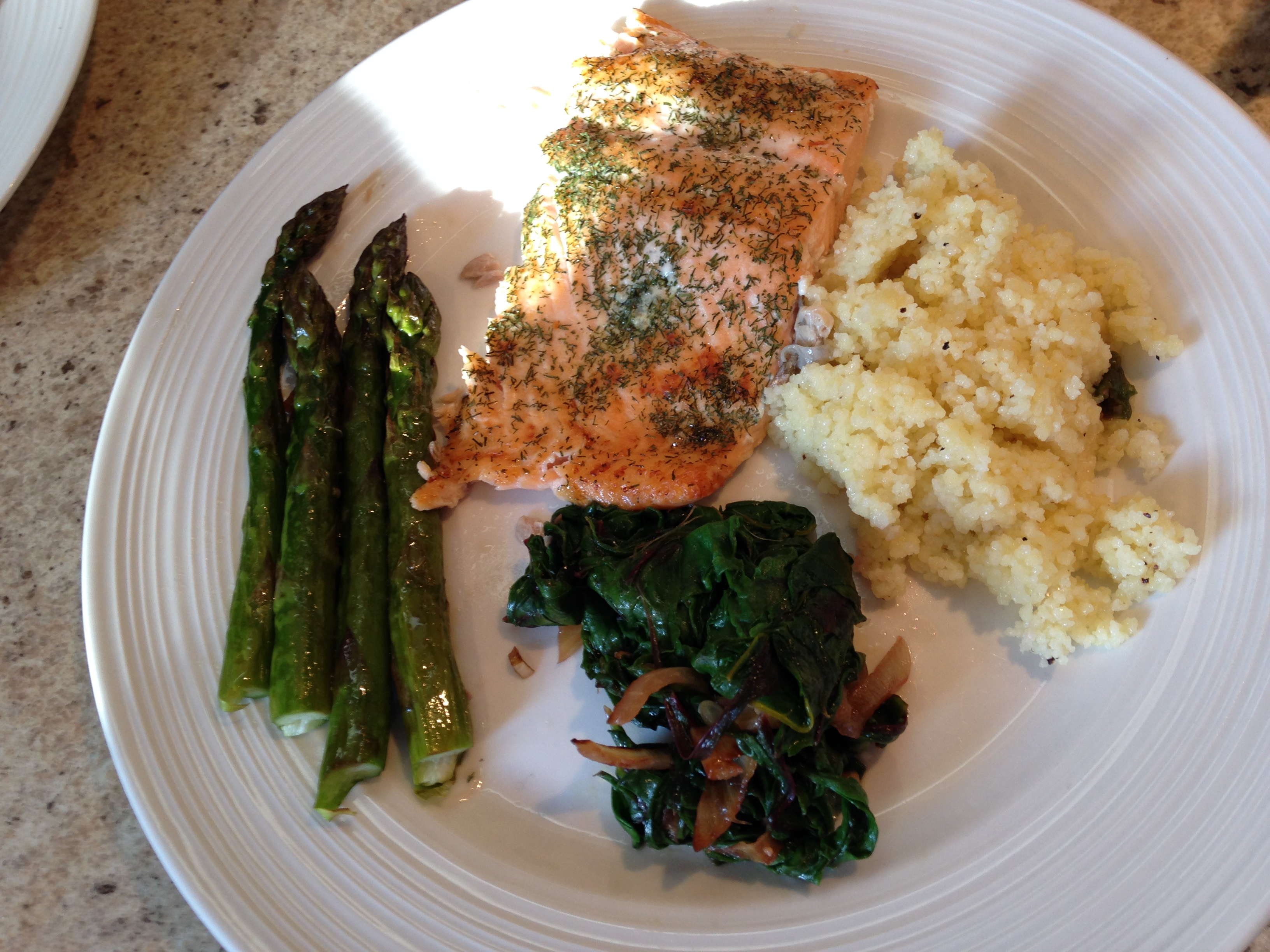
IMG_0313This is the first meal I cooked with vegetables from the market; grilled asparagus and sautéed kale with store-bought wild salmon and couscous.

I’ll receive seasonal fruit in the next delivery and I’m hoping it includes strawberries.

So far, the only caveat is that you don’t get to choose your vegetables and you may get stuck with something you don’t eat. You can always barter with other clients or like me, try a new recipe and broaden your horizons!

I’ll post updates throughout the summer.

Life After Life by Kate Atkinson

Five hundred-forty-four pages. Published by Hachette.

Yogi Berra uttered the redundant phrase, “it’s déja vu all over again,” and made it funny. There’s nothing fun about reading author Kate Atkinson’s book about déja vu all over again. Other books and movies based on the idea; The Time Traveler’s Wife and Groundhog Day come to mind, do a better job of making the time-shift paradigm enjoyable.

life-after-lifeIn Life After Life, the main character, Ursula Todd, is born on February 11, 1910. She dies at birth only to be born again and again on the exact night with different life outcomes the result of each re-birth. The book is not quite about reincarnation as it is about getting to relive your life over and over again until you get it right.

As Ursula, the precocious child in an upper-class home in the English countryside grows up, she is either raped in her home and lives with the gut-wrenching consequences or slaps her would-be rapist avoiding any second encounter; she either saves a young neighbour from a sexual predator, nearly becomes one of his victims or helps search for the missing girl; Ursula either becomes a confidant of Eva Braun or shoots Hitler herself before the war even begins.

Atkinson writes the story in a way that pivotal occasions in Ursula’s life are re-written over and over again with seemingly small but significant differences. For example, an encounter with two old ladies on a stairwell is re-written at least three times with the identical descriptions and conversations with one slight difference each time. Yet, the end results are the same. This section of the book feels like it was cut and pasted over and over again. I found it annoying to re-read.

Ursula not only has the ability to be re-born at the moment of her birth, she can jump out of windows as a teen and have a building fall upon her as an adult, die and come back again. This is where the book got murky, I wasn’t sure if Ursula’s varied deaths meant that she had to go back to her moment of birth and start over and ultimately, I didn’t know which of lives was her final one. Or, does she keep re-living her life forever?

This should have been an intriguing read full of what-ifs and if-onlys but despite its numerous awards, wasn’t.